
Do people feel safe telling the truth here?
This question determines whether your culture compounds performance or quietly limits it.
In boardrooms, companies measure revenue growth, EBITDA, market share, and customer acquisition. Few measure trust directly. Yet trust may be one of the most powerful performance multipliers inside any organization.
When employees feel safe speaking honestly, organizations detect risks earlier, solve problems faster, and innovate more effectively. When they do not, information is suppressed, errors compound, disengagement spreads, and performance declines.
Trust is not a soft value. It is operational infrastructure.
You can also revisit Class 1 here:
https://pledge4peace.org/articles/How-Power-Actually-Works-in-Your-Company
In business environments, trust is often discussed abstractly. Operationally, it means:
This concept is widely known as psychological safety. Harvard Business School professor Amy Edmondson defines psychological safety as a shared belief that a team is safe for interpersonal risk-taking.
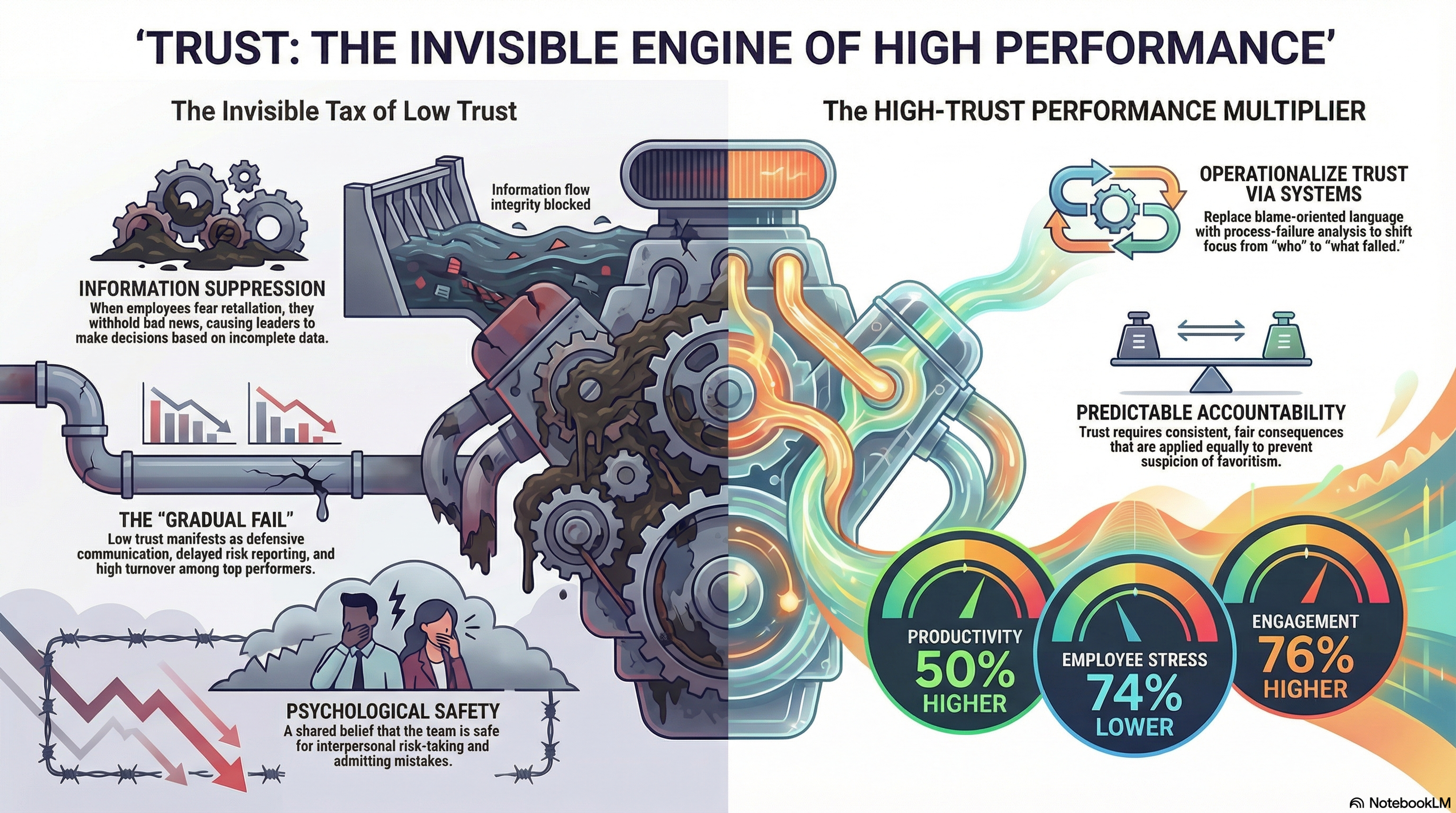
When psychological safety is absent, employees withhold information. When information is withheld, decision quality deteriorates. Leaders make strategic choices based on incomplete data.
Trust, therefore, is not cultural decoration. It is information flow integrity.
High-trust workplaces consistently outperform low-trust workplaces across measurable indicators.
Research published in Harvard Business Review found that employees in high-trust companies report:
• 74 percent less stress
• 50 percent higher productivity
• 76 percent more engagement
• 40 percent less burnout
Retention improves. Recruitment costs decline. Internal collaboration strengthens.
When employees are not protecting themselves politically, they redirect cognitive energy toward performance.
Gallup’s global workplace reports consistently show that engaged employees contribute to higher profitability and lower turnover. Trust is a central driver of engagement.
High-trust environments reduce friction. Friction reduction translates directly into performance gains.
Low-trust environments rarely collapse dramatically. They decline gradually.
Warning signs include:
When people fear consequences, they filter information. Leaders operate in partial blindness.
This increases operational risk.
According to research from the Society for Human Resource Management, voluntary turnover can cost organizations between 50 percent and 200 percent of an employee’s annual salary, depending on role complexity. High-trust environments significantly reduce voluntary exits.
Mistrust is expensive. It is simply not recorded as a line item.
Google conducted a multi-year study to determine what made teams effective. The strongest predictor of team performance was not intelligence, tenure, or technical expertise.
It was psychological safety.
Teams where members felt safe speaking openly outperformed others in innovation and execution.
Google’s findings demonstrate that trust is not incidental. It is foundational.
When Satya Nadella became CEO of Microsoft, he shifted the company from a competitive internal culture to one centered on learning and collaboration. Admitting mistakes became acceptable. Growth mindset became a leadership principle.
This shift preceded renewed innovation and significant market growth.
Trust increased adaptability.
Toyota’s production system allows any employee to halt the production line if a defect is detected. This system only functions if employees trust they will not be punished for raising concerns.
As a result, defects are addressed immediately. Long-term quality improves. Costs decline.
Trust reduces downstream failure.
Trust cannot depend on individual leadership charisma. It must be institutionalized.
Structured feedback channels create safe mechanisms for employee voice. Anonymous reporting systems, recurring listening sessions, and whistleblower protections reduce retaliation risk.
Predictable responses to mistakes transform blame into learning. Leaders who ask, “What failed in the process?” rather than “Who failed?” strengthen system accountability.
Transparent decision-making reduces speculation. When employees understand trade-offs and constraints, perceptions of favoritism decline.
Consistent accountability standards reinforce fairness. Trust does not eliminate consequences. It ensures they are applied predictably and equitably.
Leadership vulnerability models safety. When executives admit uncertainty or error, they signal that openness is acceptable.
Systems scale trust. Personality cannot.
Trust should be measured alongside financial KPIs.
Organizations can implement quarterly trust pulse surveys that assess:
Trend data reveals cultural shifts over time.
Trust metrics are predictive. When trust declines, performance indicators often follow.
Trust without accountability creates complacency.
Accountability without trust creates fear.
High-performance cultures integrate both:
This balance produces sustainable results.
Research consistently shows that teams with high psychological safety and high standards outperform teams that emphasize one dimension alone.
Turning culture into a performance asset requires intentional governance.
Ethical leadership strengthens trust by ensuring consistency, fairness, and transparency.
Organizations that institutionalize trust outperform competitors in resilience and innovation.
At Pledge4Peace, we recognize that ethical business systems contribute to broader social stability. Workplace trust is not only a business advantage. It is a civic contribution.
When companies build fair and transparent systems internally, they model accountability externally.
If your organization is serious about transforming culture into measurable performance infrastructure, become a Peace Seal business:
Peace Seal businesses gain global recognition and receive the downloadable Trust Systems Toolkit for this class immediately after sign-up.
You can also revisit Class 1 here:
https://pledge4peace.org/articles/How-Power-Actually-Works-in-Your-Company
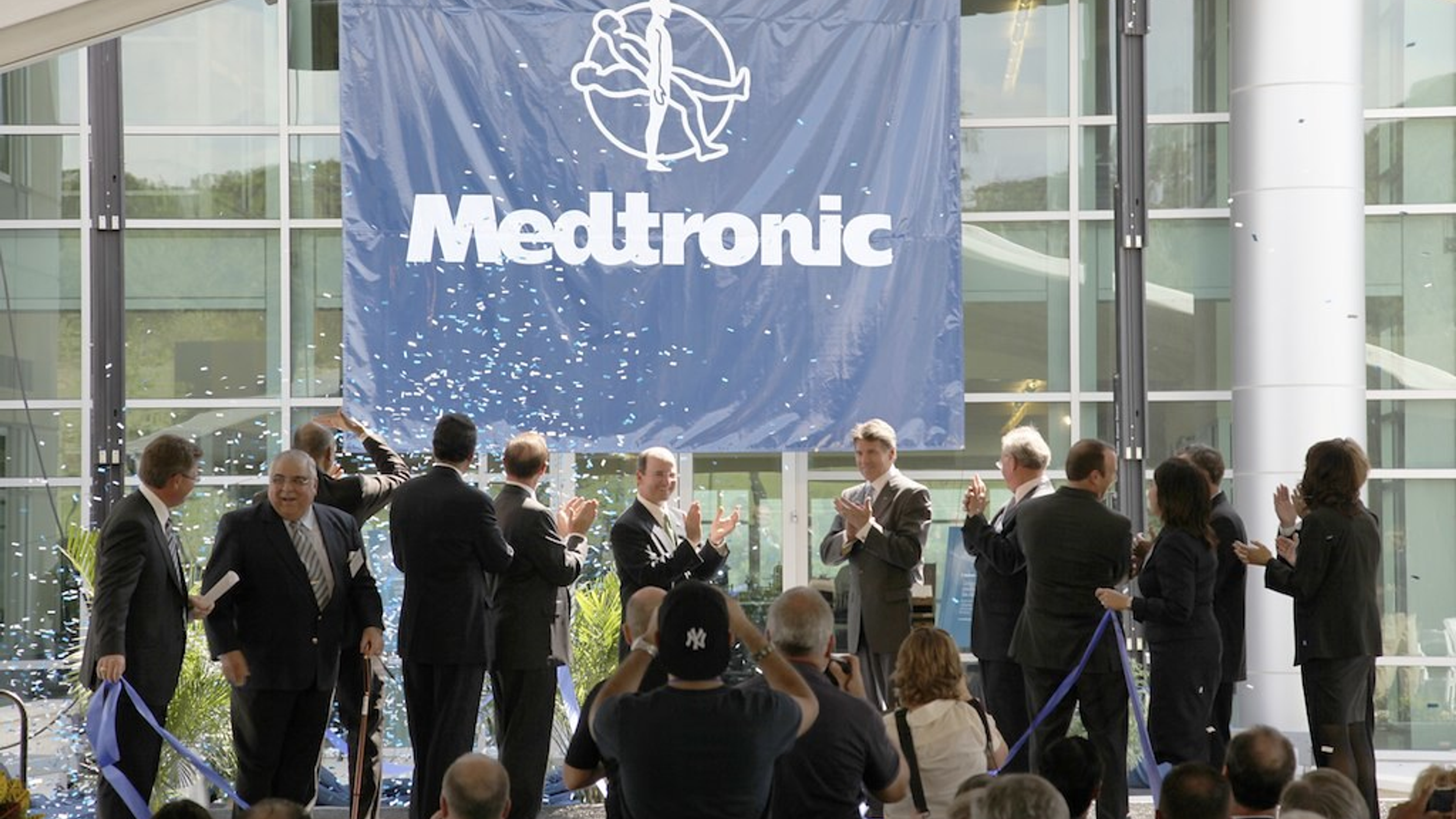
Medtronic se destaca en la categoría altamente regulada de productos sanitarios por su excepcional integridad empresarial, sólida gobernanza y programas globales de cumplimiento. En reconocimiento a su compromiso con la transparencia y las operaciones éticas, Pledge4Peace ha nominado oficialmente a Medtronic para el prestigioso Sello de la Paz 2026. Este reconocimiento celebra a las empresas que priorizan la dignidad humana, protegen a sus empleados y operan con absoluta integridad a escala global.
Pledge4Peace.org
September 16, 2026

El profundo compromiso de Hitachi con la transparencia, la integridad y el valor centenario de «Makoto» (sinceridad) le ha valido a este conglomerado multinacional una nominación oficial al Sello de la Paz de Pledge4Peace. Al alinear de manera coherente a sus filiales globales bajo unas directrices éticas unificadas e impulsar la innovación social, Hitachi demuestra que el verdadero liderazgo corporativo se construye sobre estándares éticos inquebrantables.
Pledge4Peace.org
September 15, 2026
Mientras Western Digital celebra recientemente su octavo año consecutivo en la lista de las Empresas Más Éticas del Mundo de Ethisphere, la verdadera historia está en *por qué* merece este reconocimiento. Al prevenir activamente el uso de minerales vinculados a conflictos en su cadena de suministro, fomentar una cultura laboral altamente inclusiva y comprometerse con el uso de energía 100 % libre de carbono, Western Digital demuestra que las operaciones empresariales pueden contribuir directamente a la paz mundial y a la dignidad humana.
Pledge4Peace.org
August 28, 2026
