Conflict is rising. Join the movement to create a peaceful future. Sign the Pledge

Conflict is rising. Join the movement to create a peaceful future. Sign the Pledge
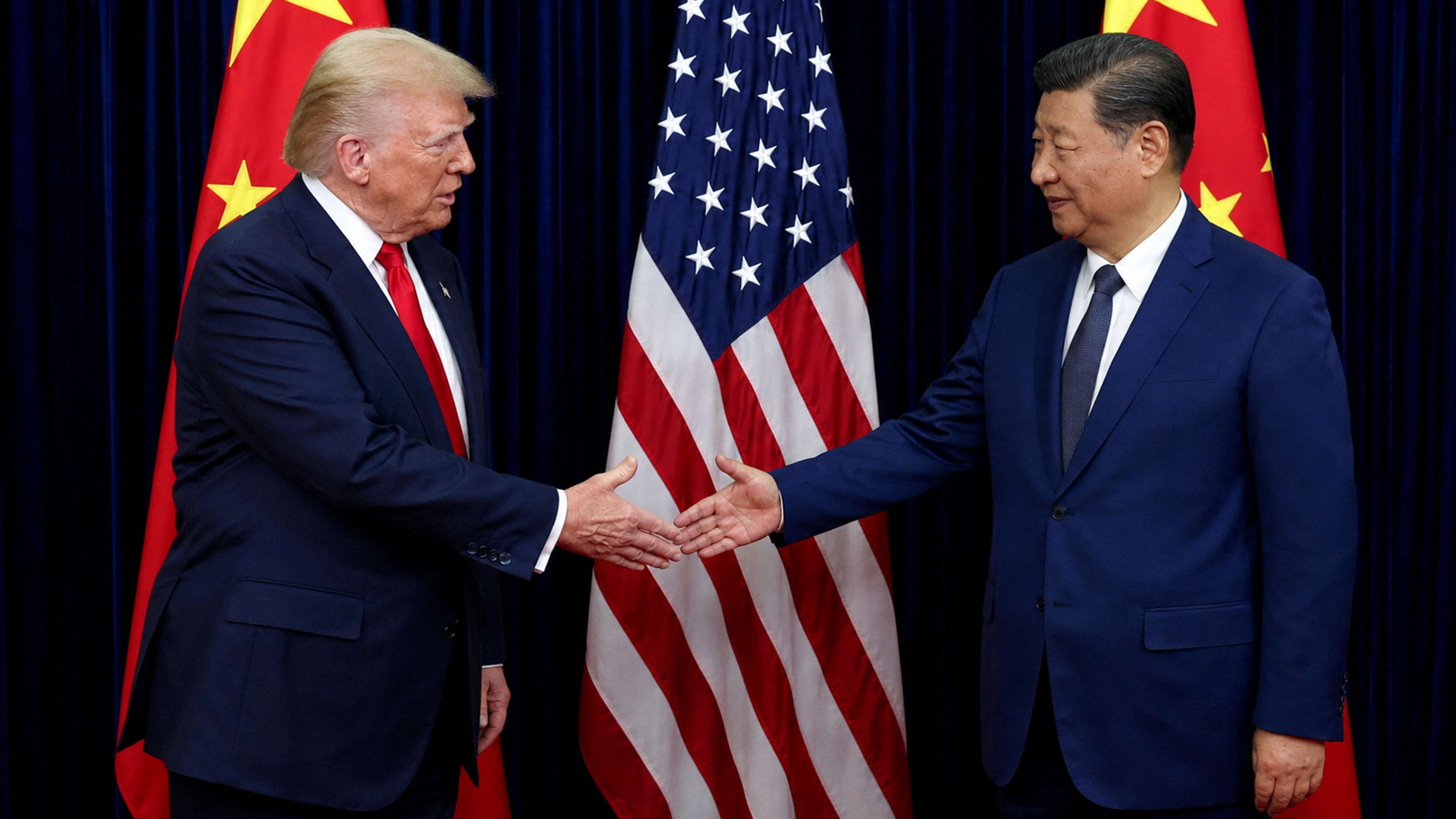

In mid-May 2026, global diplomacy experienced a seismic pivot. During the first visit of a U.S. President to the People's Republic of China in nearly a decade, President Donald Trump explicitly urged Chinese President Xi Jinping to intervene in the five-year-long war in Ukraine.
According to testimonies from officials familiar with the closed-door discussions reported by the South China Morning Post, Trump pressed Xi to utilize Beijing's sway over Moscow to pull Russian President Vladimir Putin back to the negotiating table.
This move signals a pragmatic, albeit controversial, shift in U.S. foreign policy. Rather than relying solely on Western deterrence, Washington is openly acknowledging that the road to peace in Eastern Europe may have to run through Beijing. The summit's agenda extended beyond the battlefield, tangling the fate of Ukraine with high-stakes economic friction, most notably China's sweeping export controls on rare earth minerals, which are critical for American semiconductors and defense manufacturing.
To understand the necessity of this Beijing intervention, one must look at the total collapse of traditional diplomatic channels. Direct peace negotiations between Moscow and Kyiv have been frozen since the failure of the Istanbul talks in July 2025, which ended without a definitive ceasefire agreement.
Ending the conflict became a cornerstone of President Trump’s foreign policy upon his return to the White House. This urgency was made public in March 2026, when Trump aggressively pressured Ukrainian President Volodymyr Zelenskyy to compromise, telling him to "get on the ball" regarding a negotiated deal. However, pressure on Kyiv is only half the equation. To force a bilateral ceasefire, Washington required a lever massive enough to shift Moscow's calculus. That lever is China.
If China fully accepts the role of primary mediator, it fundamentally alters the geopolitical architecture of the 21st century.

Sudan is facing the world’s worst humanitarian disaster. A devastating civil war has displaced over 11 million people, left 28 million facing acute hunger, and triggered an unprecedented wave of sexual violence used systematically as a weapon of war. Uncover the strategic crisis in El-Obeid, the harrowing UN reports, and how global citizens can take immediate action to demand international accountability and support peaceful resolutions.
Pledge4Peace.org
June 26, 2026
With tensions reaching a critical flashpoint in 2026, the US-Iran war is no longer a localized dispute; it is a global security crisis. While political leaders debate "near-final" deals that remain publicly disputed, millions of civilians bear the brunt of crippling economic sanctions and military escalation. It is time for a permanent, structural framework to secure peace in the Middle East.

The diplomatic pressure in Beijing arrived during a period of fierce, contradictory shifts on the ground in Ukraine.
In the spring of 2026, Ukraine achieved rare tactical progress, regaining more territory in a matter of months than it had ceded in the previous years. Senior Ukrainian military commanders publicly characterized the Russian army as increasingly exhausted and incapable of achieving strategic breakthroughs.
However, Russia’s response to these setbacks has been a devastating escalation in asymmetric warfare. In the weeks leading up to the summit, Moscow launched a catastrophic aerial bombardment campaign against Ukrainian infrastructure, deploying over 600 suicide drones and 90 cruise missiles. Most alarmingly, Russia deployed the Oreshnik hypersonic ballistic missile, a nuclear-capable weapon designed to bypass modern air defenses, accompanied by threats of destruction directed at Kyiv.
For a resolution to occur, China must use its unique leverage to freeze the battlefield. By threatening to choke off the supply of dual-use electronics and sanctioned microchips that currently flow through Chinese supply chains into Russian precision-guided missile systems, Beijing could theoretically strip Moscow of its ability to sustain these aerial bombardments. Without these supply chains, the Russian military apparatus faces rapid degradation, forcing Putin to accept a ceasefire.
While the logic of Trump's appeal to Xi is geopolitically sound, the practical feasibility remains highly contested. China is carefully walking a diplomatic tightrope.
On the surface, Beijing maintains a posture of strict neutrality. Following the summit, anonymous sources claimed Xi Jinping told Trump that Putin might regret launching the full-scale invasion, a claim the Chinese Foreign Ministry aggressively denied, reiterating its impartial stance.
The true test of China’s willingness to pressure Russia occurred merely days after Trump departed Beijing, when Xi Jinping hosted Vladimir Putin for a highly publicized state visit.
The Xi-Putin summit painted a vastly different picture of Beijing's priorities:
The paradox is clear: Washington is asking Beijing to dismantle the very war machine that Chinese supply chains are currently helping to sustain. While China desires the global prestige of brokering peace and stabilizing its trade relations with the U.S., it is highly unlikely to abandon its "limitless" strategic partnership with Russia, which serves as a vital counterbalance to Western hegemony.
When the resolution of a five-year war is reduced to closed-door bargaining between global superpowers over rare earth minerals and trade tariffs, the human cost is entirely sidelined. Traditional diplomacy is gridlocked in a cycle of military escalation and geopolitical horse-trading.
The citizens of Ukraine, and the global community at large, cannot afford to wait for backroom deals to finalize while hypersonic missiles level entire cities. It is time to bypass the political theater and enforce a Global Citizen Mandate.
At Pledge4Peace, we aggregate the collective will of global citizens to force world leaders to recognize diplomatic off-ramps they would otherwise ignore. Our campaign demands the restoration of territorial sovereignty through binding, transparent diplomatic agreements, not covert geopolitical trades.
Don't just watch the status quo dictate the future. Shift from a passive consumer of news to an active participant in global governance.
Enforce the mandate today. Cast your vote and shape the solution: End the Ukraine and Russia War and Create Permanent Peace
Pledge4Peace.org
June 16, 2026