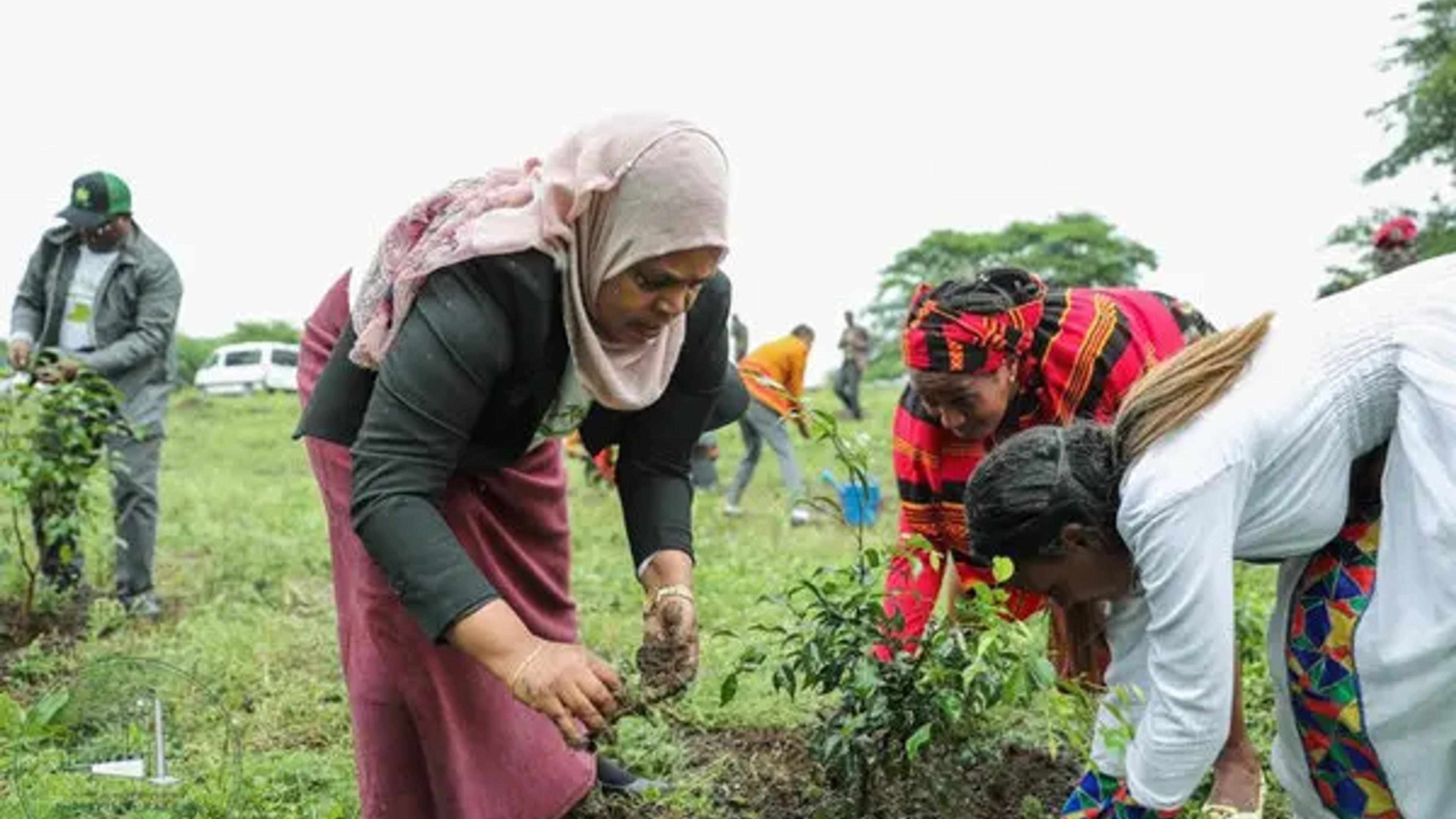

As climate change intensifies droughts, food insecurity, and land degradation across the globe, few countries have attempted solutions at the scale required to meaningfully reverse environmental damage. Ethiopia’s Green Legacy Initiative stands out as one of the most ambitious reforestation efforts in modern history, not only for the number of trees planted but also for how deeply it has engaged citizens in climate action.
Launched in 2019 by Prime Minister Abiy Ahmed, the initiative set a bold target: planting 50 billion trees by 2026. While that goal initially drew skepticism from international observers, progress over the past five years has been substantial. By 2024, Ethiopia had planted more than 32.5 billion seedlings, raising national forest coverage from approximately 17.2% to 23.6%. This scale of ecological restoration has positioned Ethiopia as a major case study in climate mitigation, land recovery, and civic mobilization.
Ethiopia’s environmental challenges are deeply tied to its development history. Decades of deforestation driven by agricultural expansion, fuelwood dependence, and population growth left large areas of land degraded and vulnerable to erosion. According to the Food and Agriculture Organization (FAO), Ethiopia loses an estimated 1.5 billion tons of topsoil annually, directly affecting agricultural productivity and food security.
Reforestation addresses multiple crises simultaneously. Trees stabilize soil, reduce erosion, enhance water retention, and help regulate local climates. They also absorb carbon dioxide, making large-scale planting a direct climate mitigation strategy. Ethiopia’s highlands, once heavily forested, have been a particular focus due to their importance for watersheds that support both rural farming and urban populations downstream.
The Green Legacy Initiative is not a single annual tree-planting event but a multi-layered national program. Seedlings are grown in more than 120,000 nurseries across the country, many of them community-run. The species selected include a mix of indigenous trees, fruit-bearing plants, and climate-resilient varieties chosen to suit local ecosystems rather than monoculture plantations.
Each planting season, often coinciding with the rainy months, millions of Ethiopians participate, including farmers, students, civil servants, and urban residents. In some years, the country has set world records for the number of trees planted in a single day, with reported figures exceeding 350 million seedlings in 24 hours. While such records attract headlines, the initiative’s credibility rests on survival rates and long-term land management rather than raw planting numbers alone.
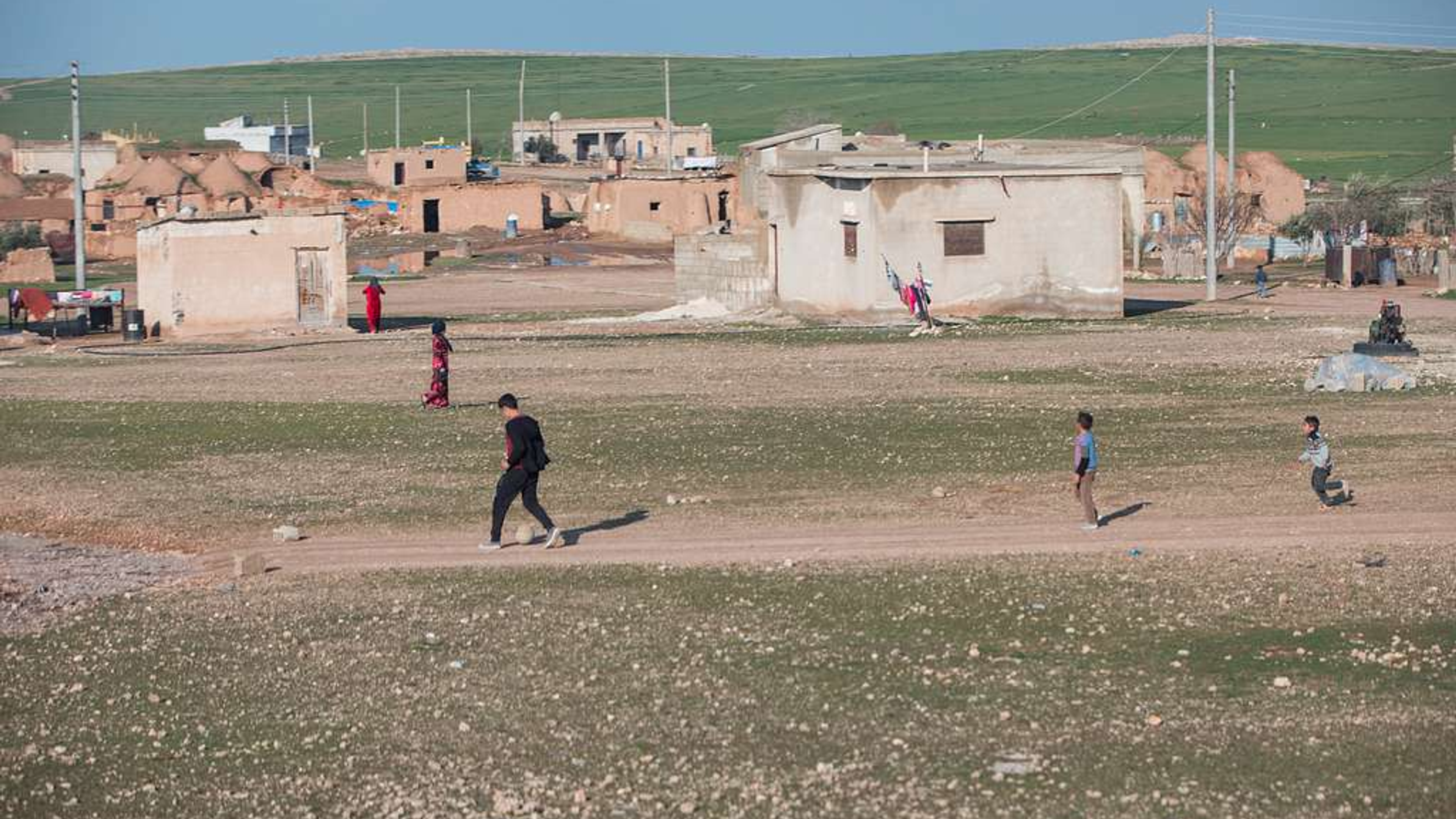
En la guerra, los niños pierden el control sobre sus vidas, pero el juego puede ayudarles a recuperar parte de ese control. En todo el mundo, casi 50 millones de niños han sido desplazados por conflictos y violencia. Las intervenciones innovadoras basadas en el juego y el apoyo psicosocial son fundamentales para la recuperación del trauma. Sin embargo, el verdadero desafío es que los ciudadanos exijan el fin de las guerras mediante campañas activas por la paz mundial.
Pledge4Peace.org
September 17, 2026

The September 11 attacks forever changed the United States, leaving a legacy of profound loss but also incredible heroism and national unity. By honoring the 2,977 victims and the brave first responders who made the ultimate sacrifice, we are reminded of our shared humanity. Today, Pledge4Peace calls upon that same spirit of solidarity to bridge divides and bring peace to global conflicts.
Government agencies coordinate monitoring, while regional administrations are responsible for post-planting care, including protection from grazing and illegal logging. Increasingly, satellite imagery and digital mapping tools are being used to assess forest cover changes and identify areas where replanting or maintenance is needed.
The increase in forest coverage from 17.2% to 23.6% represents millions of hectares of restored or recovering land. According to Ethiopia’s Ministry of Agriculture, this expansion has already contributed to reduced soil erosion in several highland regions and improved groundwater recharge in previously degraded watersheds.
From a climate perspective, reforestation is one of the most cost-effective carbon sequestration strategies available. The Intergovernmental Panel on Climate Change (IPCC) estimates that reforestation and afforestation could remove between 1.5 and 3 gigatons of CO₂ annually worldwide. Ethiopia’s contribution, while a fraction of the global total, demonstrates how coordinated national action can translate abstract climate goals into measurable outcomes.
Beyond carbon, the initiative has ecological benefits that are often overlooked in climate discussions. Increased tree cover supports biodiversity, moderates extreme temperatures, and improves resilience to droughts and floods, all of which are becoming more frequent in the Horn of Africa.
The Green Legacy Initiative is also an economic intervention. Tree nurseries create seasonal and permanent employment, particularly for women and youth. Fruit-bearing trees planted under the program contribute to household nutrition and income diversification, reducing reliance on single-crop farming.

At a social level, the initiative has helped frame environmental stewardship as a shared national responsibility rather than a top-down mandate. Participation is widely framed as a civic duty, reinforcing the idea that climate action is not limited to governments or international organizations but belongs to ordinary citizens.
Critically, this approach contrasts with extractive development models that often separate economic growth from environmental protection. Ethiopia’s strategy suggests that restoration and development can be mutually reinforcing when designed inclusively.
Despite its achievements, the Green Legacy Initiative faces legitimate challenges. Independent verification of seedling survival rates remains uneven, and some environmental groups have raised concerns about the long-term viability of certain planted species. Reforestation efforts worldwide often struggle with maintenance, as young trees require years of protection to reach maturity.
There are also broader governance questions. Ethiopia has experienced political instability in recent years, and environmental programs do not exist in isolation from social and political contexts. Sustaining reforestation gains will depend on continued local engagement, land tenure security, and transparent monitoring mechanisms.
Acknowledging these challenges does not diminish the initiative’s significance. Rather, it underscores the importance of adaptive management, community ownership, and independent evaluation to ensure that large-scale climate interventions deliver lasting benefits.
Ethiopia’s Green Legacy Initiative offers several lessons for global climate action. First, scale matters. Incremental efforts, while valuable, are unlikely to match the pace of climate degradation without coordinated national strategies. Second, public participation is a powerful force multiplier. When millions of people are directly involved, climate action becomes culturally embedded rather than externally imposed.
Third, climate solutions must be locally grounded. Ethiopia’s focus on indigenous and region-appropriate species highlights the risks of one-size-fits-all environmental interventions. Finally, transparency and long-term stewardship are as important as initial ambition. Tree planting is only the beginning; protection, monitoring, and community incentives determine success over decades.
Environmental degradation is increasingly recognized as a driver of conflict, displacement, and social instability. Competition over land and water resources has fueled tensions across regions already vulnerable to climate shocks. By restoring ecosystems and improving livelihoods, initiatives like Green Legacy contribute indirectly to peacebuilding and resilience.
At Pledge4Peace, we view climate action as inseparable from peace and human dignity. A livable environment reduces the pressures that push communities into conflict and migration, making sustainability a foundation for long-term stability rather than a peripheral concern.
Ethiopia’s Green Legacy Initiative demonstrates that large-scale, people-powered climate action is possible, even in countries facing economic and political challenges. It is not a perfect model, but it is a powerful reminder that solutions exist when leadership, citizens, and long-term vision align.
You can help amplify initiatives like this by supporting peace-driven, climate-conscious campaigns that prioritize sustainability, equity, and cooperation.
Vote on global campaigns that promote climate resilience, environmental protection, and peaceful solutions at: https://pledge4peace.org/campaigns/
Raising awareness, sharing verified successes, and supporting scalable solutions are concrete steps global citizens can take to ensure climate action moves from promises to practice.
Pledge4Peace.org
September 11, 2026