
The Voter Brief
- Current State: Four rounds of U.S.-backed dialogue between Venezuela's interim government and the 2015 National Assembly have produced concrete, verifiable reforms, though the most consequential institutional changes remain unfinished.
- The Pivot: What was once a frozen political crisis has become a structured negotiation with measurable deliverables, a fragile opening that, if protected, could carry Venezuela toward credible elections and lasting peace.
- The Mandate: Global citizens can support dialogue that rewards genuine progress while encouraging the reforms still owed to the Venezuelan people.
From Deadlock to Dialogue
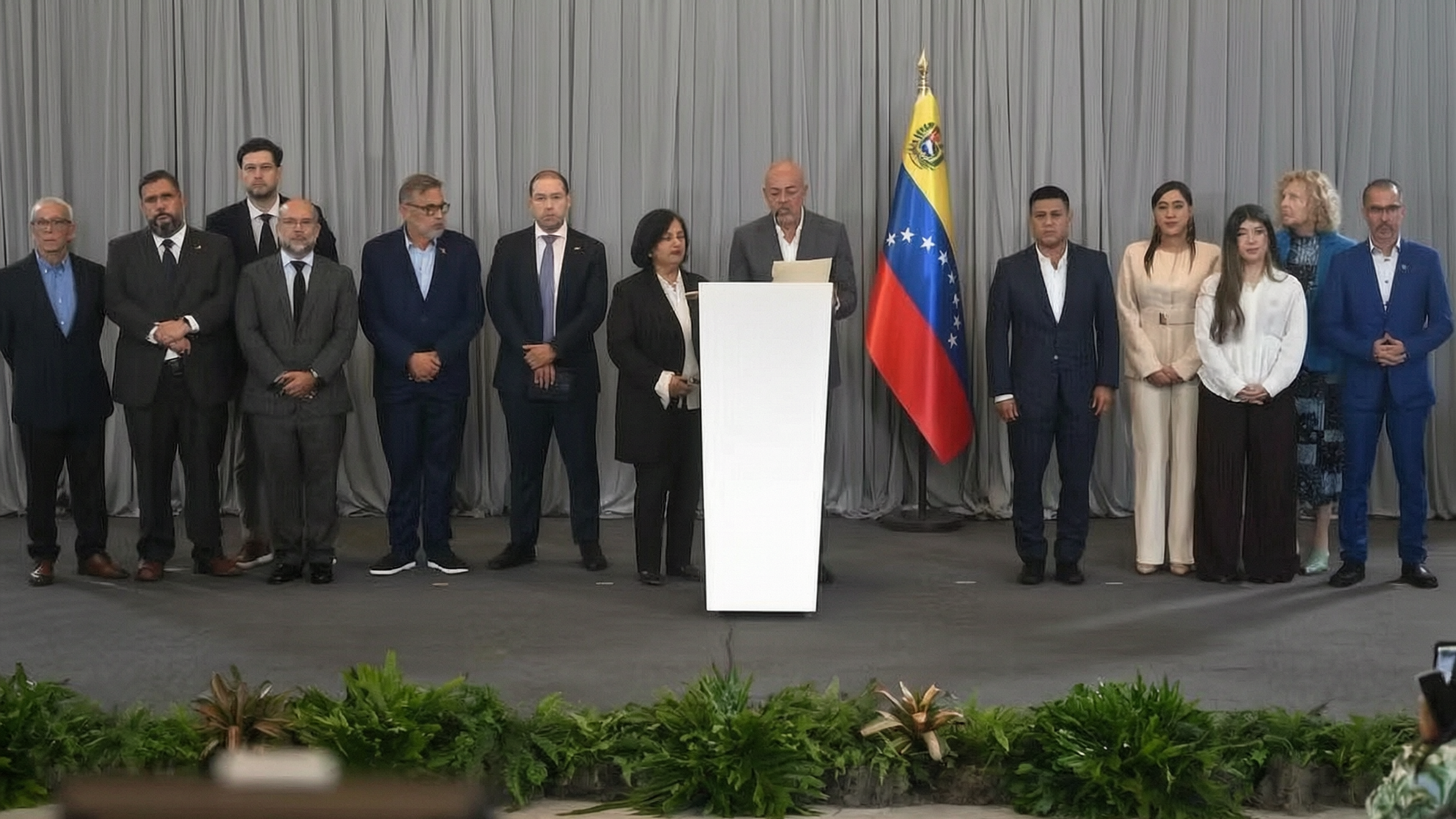
For years, Venezuela's political crisis appeared immovable, competing claims to legitimacy, a constrained civic space, and a standoff that offered little hope of resolution. The framework changed in August 2026, when the government and a faction of the opposition sat down at a U.S.-sponsored table in Caracas. The talks brought together Dr. Dinorah Figuera, head of the democratically elected 2015 National Assembly, and Jorge Rodríguez, president of the National Assembly and a senior figure in the governing PSUV.
The format itself is a sign of maturity. Rather than demanding a single grand bargain, the parties agreed to a monthly cadence, a design built to grow trust one agreement at a time. By late November 2026, they had completed a fourth round, with the next session scheduled for December. In a world where so many conflicts harden into stalemate, two adversaries choosing to keep returning to the table is, in itself, a quiet victory for peace.
The Progress Worth Protecting
The most encouraging argument for the talks is the specificity of what they have delivered. In an October 2026 statement, the U.S. State Department reported that the first two rounds produced "tangible reforms in civil liberties and political rights," including a wholesale reform and reconstruction of an independent Supreme Court, the restoration of access to more than 70 previously blocked internet domains, and the reform of a key repressive law.
Later rounds built on that foundation, and independent sources corroborate the direction:
- A freer press. The reopening of previously blocked internet domains restored access to information for millions of Venezuelans, a concrete step toward an open public square.
- Judicial independence. According to the State Department, the dialogue advanced toward selecting 32 new judges for a reconstituted Supreme Tribunal of Justice, aiming to replace a body long criticized as politically controlled.
- Political guarantees. The fourth round, concluded on November 23, 2026, focused on reforming the Law on Political Parties, covering status, registration, and revalidation, and creating an Office of the Ombudsman for Political Guarantees to safeguard participation, as reported by El País.
- Legal reform. Per the Spanish outlet Democrata, an eight-point agreement addressed laws, media, gold, and political guarantees, including plans to adapt the Organic Law against Organized Crime and Financing of Terrorism to international standards, reducing its potential use against dissent.
- Freed prisoners. A Congressional Research Service report noted that releases brought the total to more than 1,000 political prisoners freed since January 2026, among them 177 announced after the talks began.
Each of these is a person reunited with a family, a journalist reaching readers again, and a court given a chance to be fair. Progress in peace processes is rarely dramatic; it is measured in exactly these quiet, cumulative reversals of harm.
The Hardest Work Remains
Staying credible means naming what is unfinished. Independent reporting was more measured than the official communiqués. El País noted the fourth session concluded with the two sides largely agreeing to follow up on prior commitments, and the Associated Press reported that while the parties agreed to overhaul rules governing political parties, they "stopped short of mapping out a reform of the country's electoral body, a key prerequisite for presidential elections."
That distinction matters, not as a verdict against the talks, but as a roadmap for them. A reformed court and updated party rules are necessary but not sufficient. Without an independent National Electoral Council, the question every Venezuelan cares about, whether a vote will be counted fairly, stays open. The process has, in fair terms, cleared much of the runway while the final, decisive reforms are still being negotiated.
Why This Matters Beyond Venezuela
The stakes reach well past Venezuela's borders. A peaceful democratic transition would help ease one of the Western Hemisphere's largest displacement crises, contribute to regional stability, and offer a working example that deeply polarized societies can negotiate their way toward the ballot box rather than the battlefield. The reverse is also true: a collapse of dialogue would risk renewed repression and regional instability. History suggests that negotiated transitions succeed when each verified concession is met with reciprocal steps, and that sustained, principled international attention is often what keeps that momentum alive.
What Enduring Peace Requires
For this progress to become permanent, several benchmarks stand out:
- Electoral reform. Finalizing an independent National Electoral Council with transparent rules and credible observation remains the single most important unfinished task.
- Verifiable implementation. Agreements on paper must become daily reality, released prisoners who remain free, courts that rule independently, and laws applied without discrimination.
- Inclusive participation. Guarantees that protect all political actors, including those previously barred, will determine whether an election truly reflects the will of the people.
- Consistent engagement. Diplomatic support that encourages genuine progress keeps incentives aligned with peace.
Take Action
Venezuela's path is neither guaranteed nor hopeless, it is being built, round by round, by people choosing negotiation over force. That choice deserves a global voice behind it.
You can add yours. Vote on the solutions in the campaigns at Pledge4Peace, a global movement committed to resolving conflict through dialogue, dignity, and diplomacy rather than division. Cast your vote on the peace initiatives you believe will move the world toward lasting stability: https://pledge4peace.org/campaigns/
Sources: U.S. Department of State; Congressional Research Service; El País; Associated Press; Democrata.